
Shop and Yard Safety: Complacency Is the Hazard
The most dangerous thing in a shop isn’t a specific machine — it’s familiarity. The injuries happen to experienced people doing a routine task the way they’ve done it a thousand times, on the day something’s slightly different. Respect for the work doesn’t fade because you’ve done it before; that’s exactly when it matters most.
Stop-work is everyone’s authority
Anyone can stop a job that’s unsafe — no rank required, no permission needed, no penalty for being wrong. A shop where people feel they can’t halt a bad situation without looking soft is a shop that’s one bad day from an injury. Using stop-work over something that turns out fine costs a few minutes; not using it over something that turns out badly costs a hand or a life. The culture that makes stopping normal is the one that stays whole.
The safe shop is a behavior, not a poster
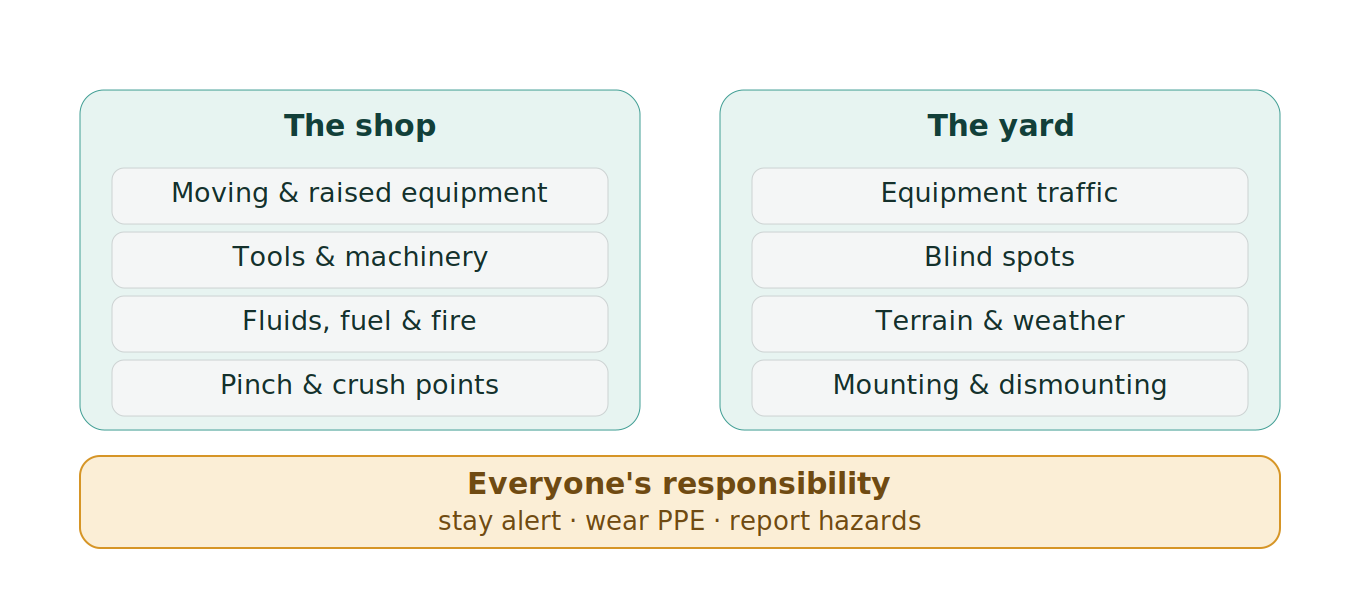
Safety is what the shop actually does when no one’s checking: tools put away, spills cleaned, guards in place, PPE worn, hazards flagged. A clean, organized shop is a safer and faster one; a cluttered, cut-corner shop is where people trip, reach into the wrong place, and get hurt. It also tells a customer exactly what to expect from the work.
Look out for each other
Most saves come from a coworker noticing what you can’t — the load about to shift, the guard you forgot, the tool in the wrong place. A shop where people watch each other’s backs and speak up catches the near-miss before it’s an incident.
Where it goes wrong
- Letting familiarity replace attention on a routine task.
- Feeling unable to stop an unsafe job.
- Treating housekeeping and PPE as optional when busy.
- Staying quiet about a hazard you noticed.
Related
PPE · Lockout/tagout · Building a dealership safety program · Incident reporting.