
PPE: The Last Line, Not the First
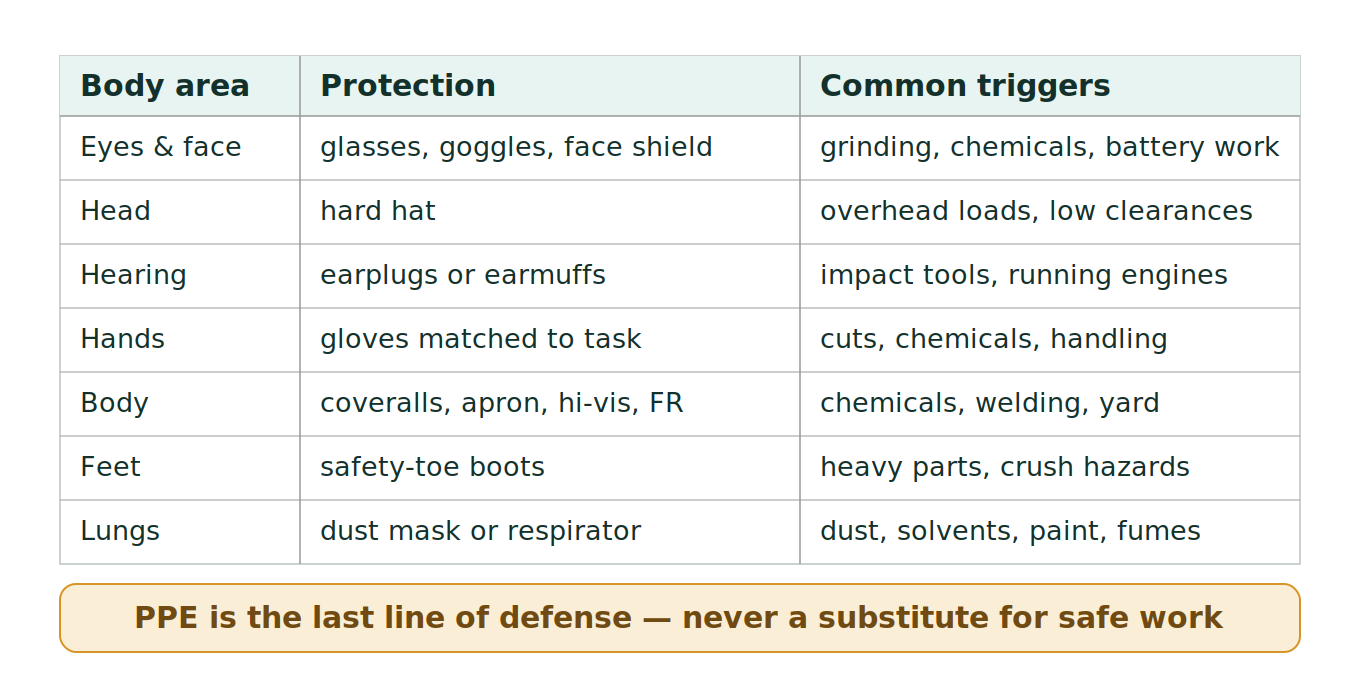
PPE is what protects you when everything else has failed — it doesn’t remove a hazard, it stands between you and the consequence. Eliminating or guarding the hazard comes first; PPE is the backstop, and it only works if it’s the right gear, worn right, every time.
The gear and when it matters
Eye protection whenever anything can fly, splash, or arc — grinding, cutting, working under a machine, handling chemicals or fuel. Hearing protection in sustained noise. Gloves matched to the task (cut-resistant for sharp work, chemical for solvents). Foot protection for the loads and hazards a shop drops. Respiratory protection for welding fumes, dust, and chemical vapors. Face shields for grinding, wire wheels, and anything that launches particles.
The exception that catches people: gloves near rotating equipment
Gloves protect your hands most of the time, and around rotating equipment — lathes, drill presses, wire wheels, rotating shafts — they become a hazard. A glove that catches in a turning machine pulls your hand in before you can react; bare hands pull free where a glove would drag you into the machine. Know the tasks where gloves come off, and treat that as a hard rule, not a preference.
Worn right, every time
The wrong shade of welding lens, safety glasses pushed up on the forehead, a respirator that doesn’t seal — all of it is PPE that isn’t protecting anything. Gear maintained, fitted, and actually worn is the only kind that counts.
Where it goes wrong
- Treating PPE as the hazard control instead of the last line.
- Wearing gloves near rotating equipment.
- Skipping eye or hearing protection “for a quick job.”
- Using the wrong gear for the task, or wearing it improperly.
Related
Shop and yard safety · PTO and rotating equipment hazards · Hazard communication and SDS · Fire safety.