
Matching a Planter
A planter’s work sets the yield and can’t be fixed after emergence, which makes it a high-stakes, technology-heavy sale where the cheap version costs the customer more in lost bushels than it saved on purchase.
Row spacing has to fit the whole operation
Row spacing and count must match their crops, their combine header, their cultivation, their existing setup. Sell a spacing that doesn’t fit and you’ve built a machine that fights everything else they own.
Don’t let them under-buy what sets the yield
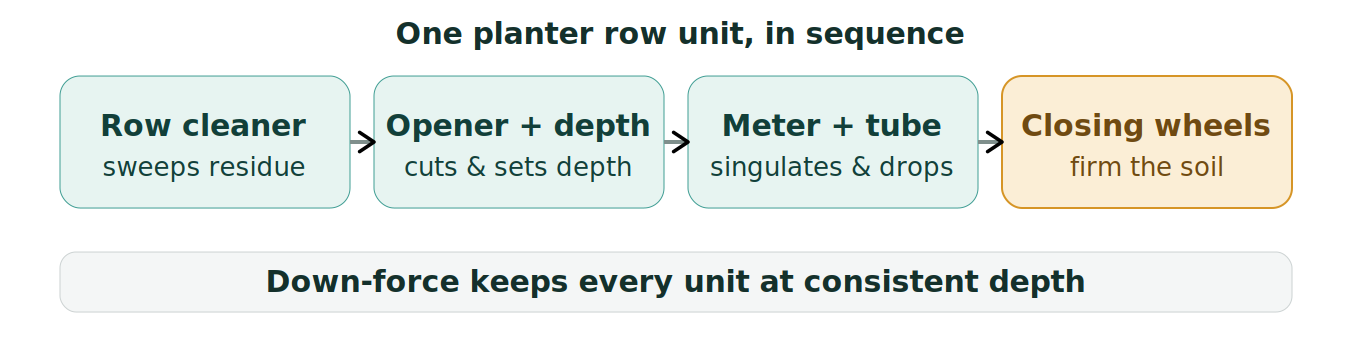
- Meter (singulation) is the heart of the planter — doubles and skips are lost yield every row, every acre. Not the place to save money.
- Down-force control keeps depth even across changing soil; passive down-force on variable ground leaves uneven emergence.
- Precision integration — electric/hydraulic drive, section and row shutoff, variable-rate population, seed sensors — is much of a modern planter’s value and the dealership’s support relationship.
Match it to the tractor and the calendar
The planter’s hydraulic and control demands have to match the tractor pulling it — remotes, flow, display/ISOBUS compatibility. And the customer’s real fear is a planter that isn’t ready in a narrow, weather-driven window, so getting them set up and confident before the window wins the loyalty and the next sale.
Where it goes wrong
- Selling a row spacing or count that doesn’t fit the operation.
- Letting a customer under-buy the meter or down-force.
- Ignoring the precision integration and the support it creates.
- Overlooking tractor compatibility for hydraulics and controls.
Related
Tractors · Selling precision ag · The seasons of ag · Consultative selling.