
Pay Plans and Incentives
A pay plan is a behavior-design tool, not just a formula for paychecks — salespeople rationally do what they’re paid to do, so you get the behavior you compensate whether or not anyone intended it.
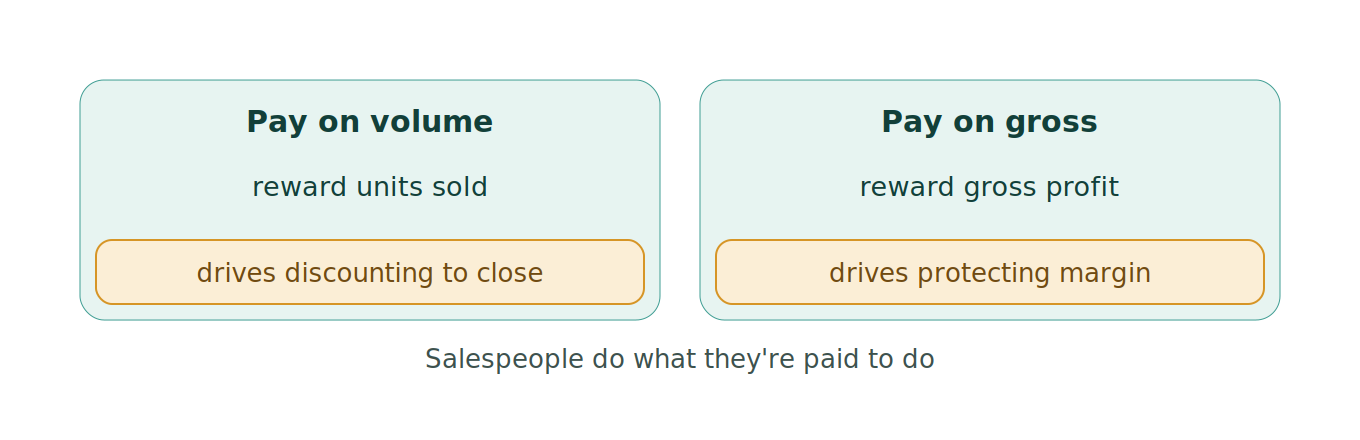
Comp on volume, get discounting; comp on gross, get margin
Pay primarily on units and the fastest way to more units is to discount — a volume plan quietly trains the sales force to destroy gross, which on thin whole-goods margins is a disaster. Pay on gross profit and the salesperson’s interest aligns with the dealership’s: a discount that kills gross kills their commission, so they hold value and protect margin. Paying on gross makes them care about the same number the dealership does.
The other components, and the salesperson’s view
Good plans add process and CSI components (rewarding clean deals and satisfaction, not just the sale), a draw (an advance smoothing the lumpy income of selling), and spiffs (short-term bonuses to move specific inventory — useful, and a trap when they pull a rep toward pushing the spiffed unit over the right fit). If you’re the one being paid: understand your plan cold so you know where to focus, and never let it warp how you treat customers — chasing a spiff into the wrong machine wins a dollar and loses a twenty-year relationship.
Where it goes wrong
- (Managers) designing a plan that pays for the wrong behavior and getting exactly that.
- Chasing volume with discounts under a plan that rewards it.
- Pushing a spiffed unit over the right machine for the customer.
- Not understanding what you’re actually paid on.
Related
Pricing and protecting gross margin · Sales management and coaching · Objections and negotiating · Pay plans by department (HR).