
Warranty Policy and Coverage
Warranty is where customer expectations and manufacturer rules collide, and the way to stay out of trouble is to never promise coverage you haven’t confirmed. What’s covered, what isn’t, and the gray area in between all have to be handled honestly, because a customer told “that’s covered” who then gets billed is a customer lost.
Covered, not covered, and why
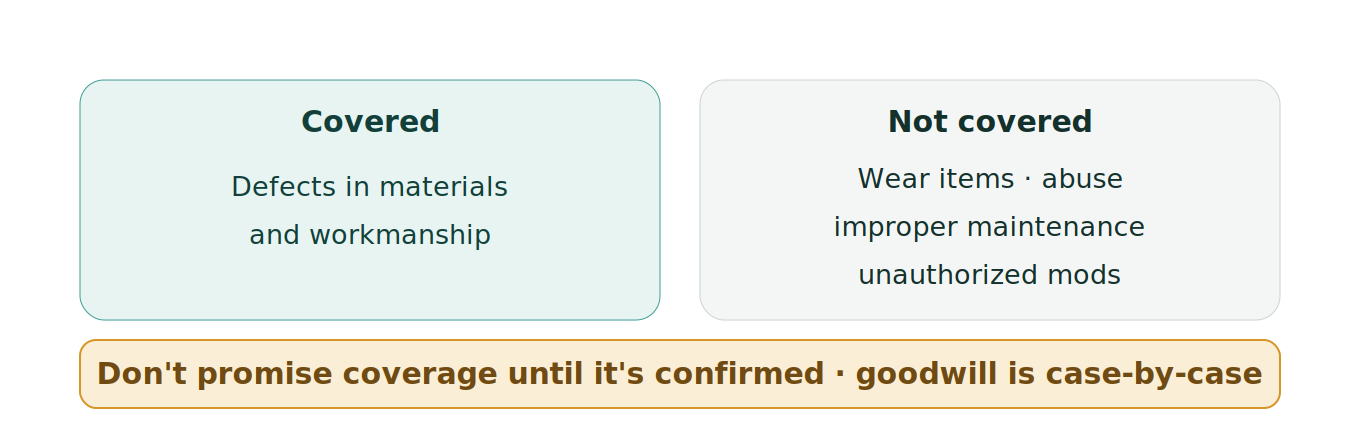
Warranty covers defects in materials and workmanship for a term; it does not cover normal wear items (filters, blades, wear parts), damage from abuse or misuse, failures from improper or skipped maintenance, or problems from unauthorized modifications. The distinction that trips customers up is defect versus wear-and-maintenance: a failed component from a manufacturing defect is covered, the same component worn out from use or neglected service is not. Knowing where that line sits keeps you from promising the wrong thing.
Don’t promise what you can’t confirm
The cardinal rule: don’t tell a customer “that’s under warranty” until it’s confirmed, because reversing it after they’ve heard yes is worse than a careful “let me verify coverage.” Coverage can depend on the failure cause, the maintenance records, the term, and the OEM’s determination — so the honest move is to submit it and let the process decide, while setting the customer’s expectation that it isn’t guaranteed until approved.
Goodwill and the gray area
Manufacturers and dealers sometimes make goodwill / policy adjustments — covering something outside strict warranty to keep a good customer or where the situation is borderline. That’s a real tool and a judgment call, not an entitlement, and it’s managed deliberately (often with OEM involvement) rather than promised at the counter. And warranty versus maintenance is a conversation to have honestly up front: the customer owns the maintenance, the warranty owns the defects.
Where it goes wrong
- Promising coverage before it’s confirmed and having to walk it back.
- Blurring the line between a covered defect and uncovered wear or neglect.
- Treating goodwill as an entitlement to hand out.
- Letting a customer believe maintenance is warranty.
Related
Filing warranty claims and passing audits · How dealers and manufacturers work together · The service advisor role · Ethics.