
Internal Controls and Fraud Prevention
Internal controls are the procedures that protect the dealership’s money and assets from error and theft — and they protect honest employees just as much by keeping everyone above suspicion. They can feel like bureaucratic friction until you understand that every one exists because, somewhere, its absence let money walk.
What controls are and why they exist
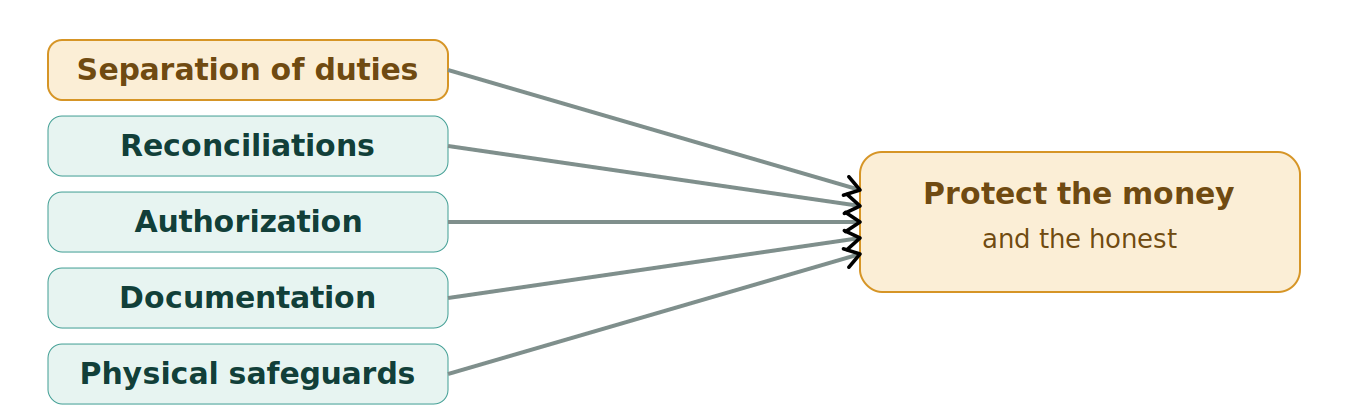
Internal controls are the checks built into how money and assets are handled: separation of duties (the person who handles cash isn’t the one who reconciles it; the person who approves a payment isn’t the one who cuts the check), reconciliations (verifying balances against independent sources), authorization (approvals required above thresholds), documentation (a paper trail for every transaction), and physical safeguards (securing cash, inventory, and access). Each closes an opportunity for error or theft. They’re friction on purpose — the friction is what catches the mistake and deters the temptation.
Separation of duties is the core idea
The single most important control is separation of duties — no one person controlling a whole transaction from start to finish, because that’s exactly where fraud and undetected error live. When the same person can take cash, record it, and reconcile the drawer, a discrepancy has no independent check; when those are separated, each acts as a check on the others. This isn’t distrust of any individual — it’s the structure that protects everyone, because a controlled process means no honest person is left holding sole responsibility when something goes wrong, and no dishonest one has an easy opening.
Fraud prevention protects everyone
Dealerships handle a lot of cash, inventory, and valuable transactions, which makes them a target for fraud — internal and external — and the controls are the defense. Following them exactly (not sharing logins, not skipping approvals, not “just this once” bypassing a reconciliation), reporting discrepancies rather than hiding them, and understanding that the controls protect the honest majority is the professional stance. A dealership with strong, followed controls catches problems small and keeps its people clear of suspicion; one that treats controls as optional invites the loss and the accusation both.
Where it goes wrong
- Treating controls as bureaucratic friction to bypass “to save time.”
- Letting one person control a whole transaction end to end.
- Sharing logins, skipping approvals, or bypassing reconciliations.
- Hiding a discrepancy instead of reporting it.
Related
Cashiering and cash handling · Month-end close and reconciliations · Ethics · The controller / office manager role.