
The DMS and Why Your Data Discipline Matters
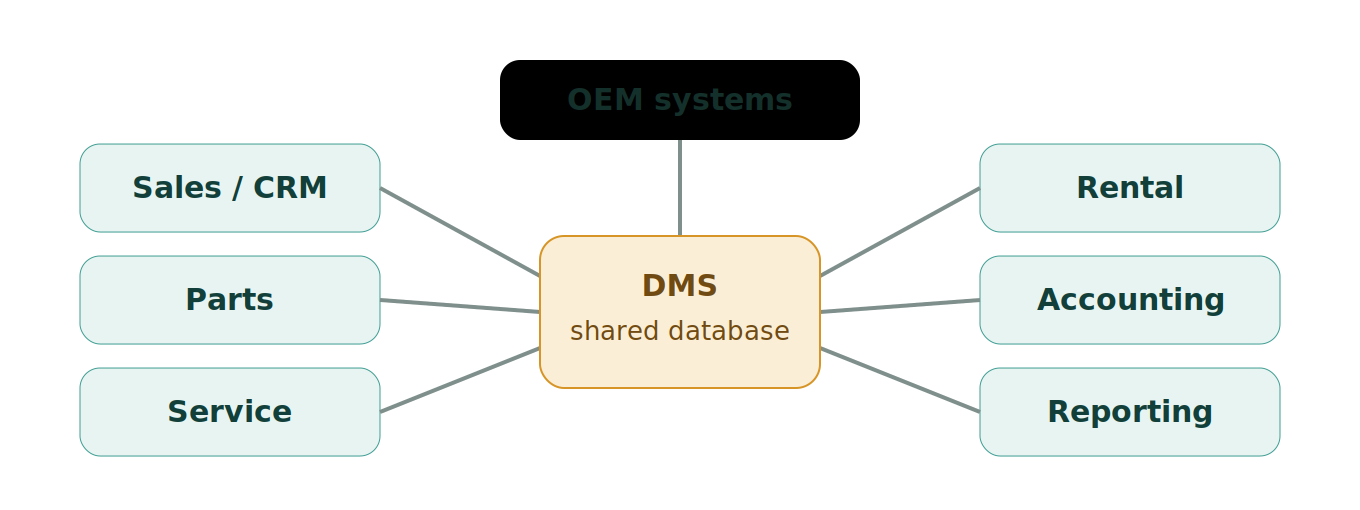
The dealer management system is the single system of record — inventory, work orders, parts, customers, accounting, and reporting all live in it. Its usefulness is entirely a function of how clean the data going into it is, and every person in the building feeds it. Garbage in is garbage out, and in a dealership the garbage costs real money.
What runs on it
Parts inventory and reorder points, whole-goods inventory and aging, work orders and time, customer and equipment history, invoicing and accounting, and the reports management runs the business on. Because it’s one connected system, an error entered in one place surfaces everywhere downstream — a part sold under the wrong number drifts the count, corrupts the reorder math, and shows a fill rate that lies.
Accuracy is everyone’s job
The reorder system only stocks right if counts are right. Fill rate only means something if the data’s honest. Warranty only pays if the work order is documented correctly. The equipment history only helps the next tech if it was entered. None of that is the “office’s problem” — it’s made or broken one transaction at a time by whoever touched the record: the counterperson who used the exact part number, the tech who logged the three C’s, the receiver who put the part away and updated the bin. Sloppy entry doesn’t stay local; it becomes a phantom stockout, a denied claim, or a wrong report.
Trust it, and keep it worth trusting
The point of a system of record is that people can act on it without re-checking — pull a bin location, trust a stock count, read a customer’s history. Every un-updated location and mis-keyed count erodes that, and an untrusted system is worse than none because people stop relying on it and start working around it.
Where it goes wrong
- Entering transactions carelessly and drifting the counts.
- Treating data accuracy as the office’s job rather than everyone’s.
- Overriding or skipping system steps “to save time.”
- Trusting a number nobody has kept accurate.
Related
Point of sale in the DMS · Receiving and put-away · Physical inventory and cycle counting · Reading the scoreboard.