
ISOBUS and Implement Control
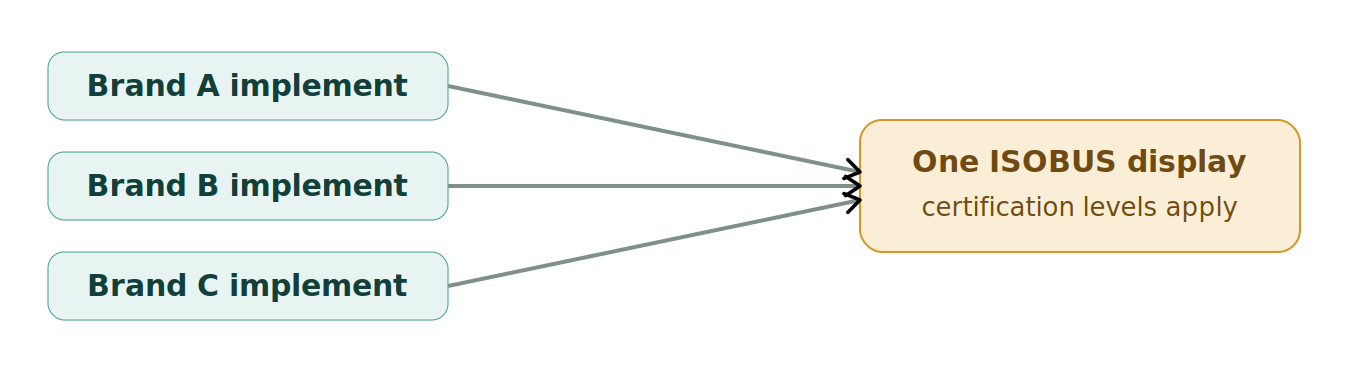
ISOBUS is the standard meant to let any implement talk to any tractor and display regardless of brand — one display running many tools instead of a monitor for each. The promise is real and so is the fine print: “ISOBUS” doesn’t guarantee every function works across every brand, and the certification levels are what tell you what actually will.
The standard and the promise
ISOBUS (ISO 11783) is a common communication standard so an ISOBUS implement brings its own controls up on a compatible ISOBUS display — no separate monitor per implement. Its core pieces: the universal terminal (the implement’s screen on the tractor’s display), the task controller (handling section control and variable rate), and higher functions like tractor-implement management. The benefit is less cab clutter and one interface across a mixed-brand fleet, which matters a lot to a best-in-class buyer running several colors.
The reality: certification levels
“ISOBUS-compatible” isn’t a single guarantee. Functionality is defined by certification levels (the industry’s AEF conformance — universal terminal, task controller sections, task controller variable rate, and so on), and two ISOBUS devices only do together what both are certified for. So a display and an implement might handle basic control but not, say, task-controller section control unless both support it. Checking the specific certified functions — not just the ISOBUS label — is how you avoid promising a capability that doesn’t actually work across the customer’s mix.
Set expectations on compatibility
The practical job is telling a customer honestly what their display and implement will and won’t do together, rather than assuming the badge covers it. A mixed-fleet customer expecting full plug-and-play who hits a compatibility wall in the field blames the dealership — so confirm the certified functions up front.
Where it goes wrong
- Assuming the ISOBUS label guarantees every function across brands.
- Not checking the specific certification levels of display and implement.
- Promising task-controller functions both devices don’t support.
- Overlooking compatibility on a mixed-brand fleet.
Related
Displays and in-cab technology · Section and row control · Variable-rate technology · Servicing precision hardware.