
Fire Safety and Extinguishers
A shop is full of fuel, oil, solvents, oxygen and acetylene, batteries, and hot work — the ingredients of a fire that goes from small to unstoppable fast. Prevention is most of the job; the extinguisher is the backstop, and knowing when to fight and when to leave keeps you alive.
Prevention and the oily-rag trap
Keep ignition sources away from fuel and vapor, control hot work (welding and grinding sparks travel and smolder), store flammables properly, and keep the shop clean. The specific one people underrate: oily and solvent-soaked rags can spontaneously combust — the oil oxidizes, generates heat, and with no way to escape in a pile, ignites on its own with no spark. Store them in a sealed metal container, not a heap in the corner.
Know the class
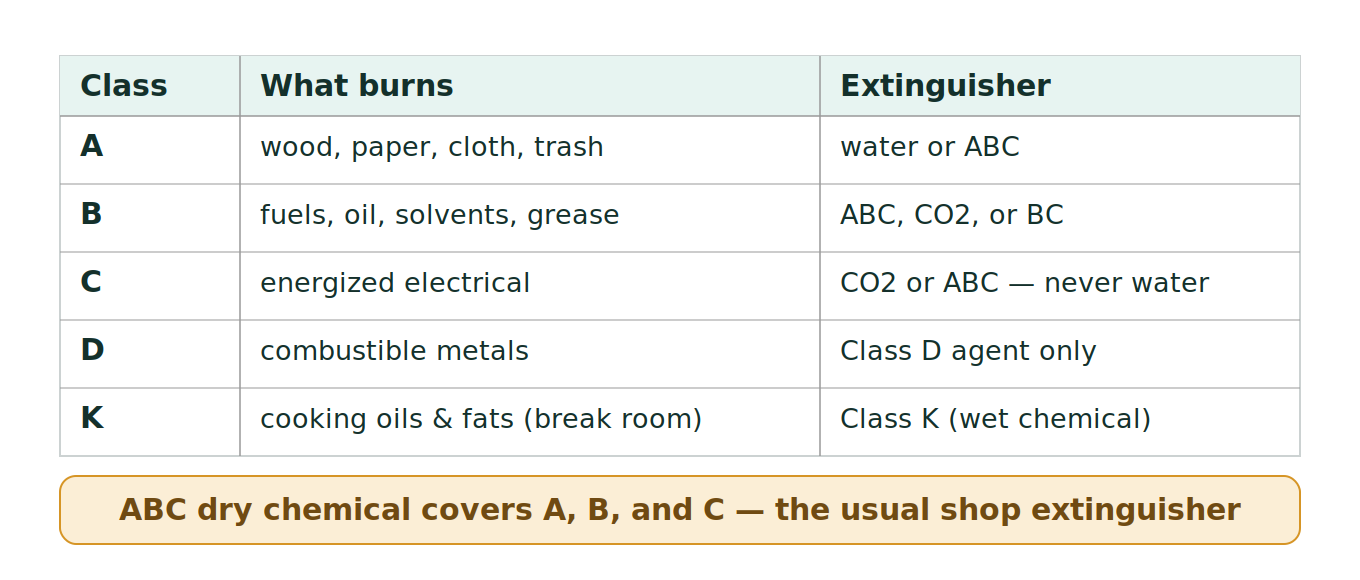
A (ordinary combustibles), B (flammable liquids — fuel, oil, solvent), C (energized electrical), D (combustible metals). A shop mostly needs ABC coverage; using the wrong type can make a fire worse (water on a fuel or electrical fire). Know where the extinguishers are before you need one.
PASS, and fight-or-flee
Use it with PASS — Pull, Aim (at the base), Squeeze, Sweep. But fight a fire only if it’s small and contained, you have the right extinguisher, the room isn’t filling with smoke, and your exit is at your back. If any of those isn’t true, get out and get everyone out — an extinguisher buys seconds, and a fire that’s beyond it isn’t worth a life. Property is replaceable.
Where it goes wrong
- Piling oily rags instead of using a sealed metal can.
- Careless hot work near fuel, oil, or vapor.
- Using the wrong extinguisher class.
- Fighting a fire that’s already past the extinguisher instead of leaving.
Related
Welding and fabrication · Handling fuel and chemicals · Shop and yard safety · Hazard communication.