
A Safety Program Is a Culture, Not a Binder
A safety program written down and ignored protects no one. The programs that actually reduce injuries are the ones lived in daily behavior — and the difference shows up in whether people stop unsafe work, wear the gear, and report near-misses when no one’s checking.
Leading vs lagging indicators
A program measured only by injuries (a lagging indicator) is measuring failure after the fact. The programs that improve safety watch leading indicators — training completed, near-misses reported, hazards found and fixed, safety observations, audits passed — because those predict and prevent injuries instead of counting them. A quiet injury log with no near-miss reporting isn’t a safe shop; it’s a shop that isn’t catching its warnings.
What makes it real
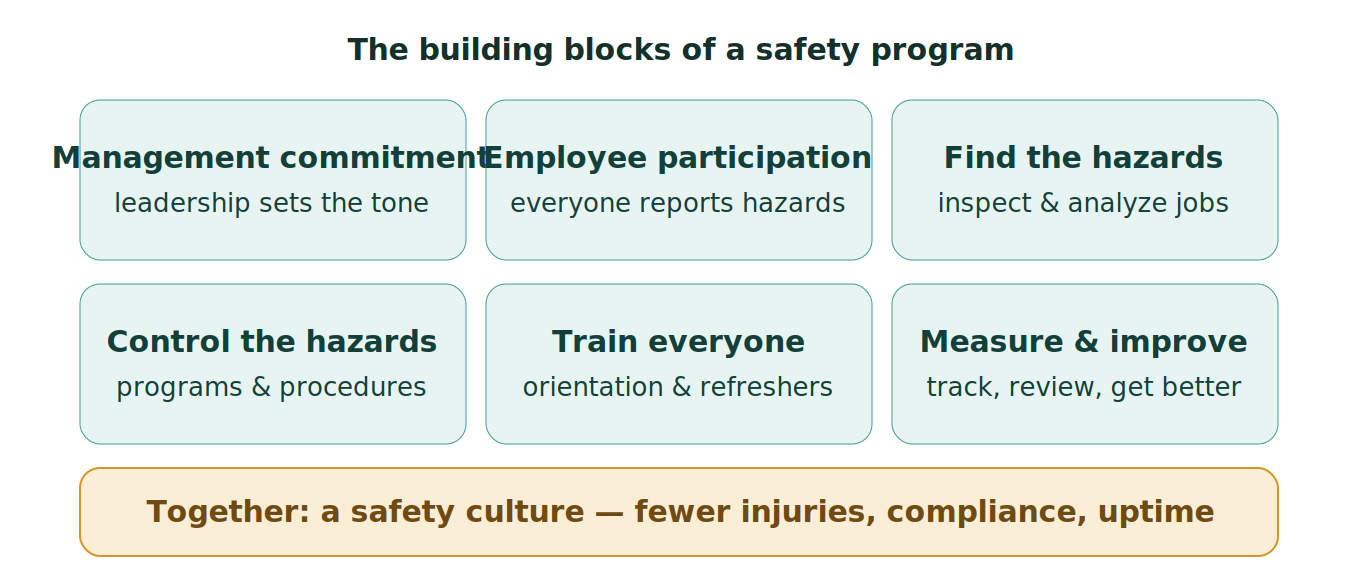
Management commitment that’s visible (leadership follows the rules and backs stop-work), ongoing training, genuine hazard identification and correction, and a culture where reporting is welcomed rather than punished. When the program is just paperwork to satisfy an audit, people read that and behave accordingly; when it’s what leadership actually cares about, behavior follows.
Where it goes wrong
- Treating the program as a binder to satisfy an audit.
- Measuring only injuries and missing the leading indicators.
- Leadership exempting itself from the rules.
- Punishing reports and driving hazards underground.
Related
Shop and yard safety · Incident reporting · OSHA essentials · Management and culture.