
Matching a Sprayer
A sprayer sells on accuracy and productivity, and its mistakes carry liability — drift onto a neighbor’s crop, misapplication, off-label use. It’s a technology-heavy machine, not a tank and a boom.
The specs that decide the fit
- Boom width and tank size set productivity — acres per hour and refill frequency; match them to the acres and water logistics, not the biggest numbers.
- Crop clearance is the make-or-break spec people miss: it has to clear the crop at the growth stage the customer sprays. A machine that can’t get over tall corn late is wrong no matter how good everything else is.
- Self-propelled vs pull-type is a capital decision — the self-propelled machine is justified by acres, timeliness, and clearance.
Sell the accuracy, and take stewardship seriously
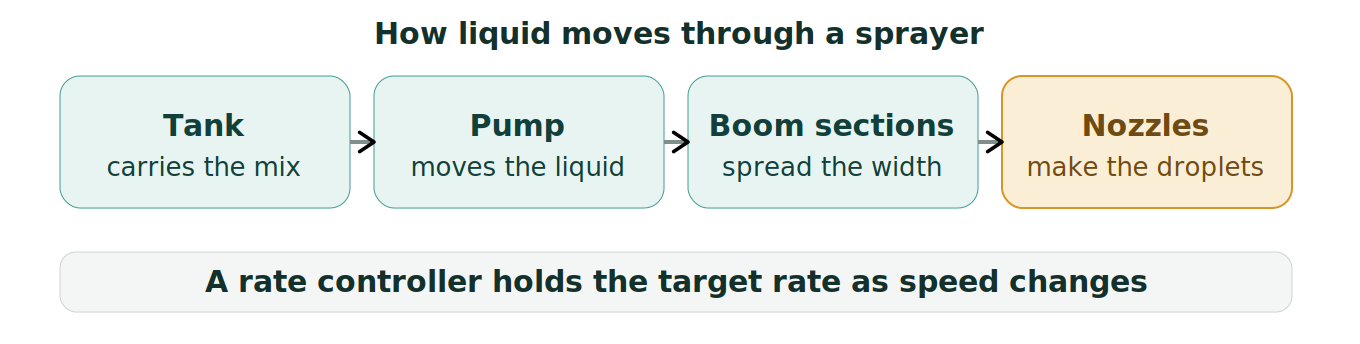
The precision features are the real value: automatic rate control, section and nozzle shutoff to kill overlap and skips, boom-height control, PWM, and emerging see-and-spray. And drift management (nozzle, pressure, conditions), label compliance, and rinsate handling are the customer’s exposure — a salesperson who sells the drift-control and accuracy honestly, rather than glossing them, wins the sophisticated grower.
Where it goes wrong
- Ignoring crop clearance for the customer’s actual spray timing.
- Over- or under-sizing boom and tank for the operation.
- Selling it as a tank-and-boom and skipping the accuracy technology.
- Pushing a self-propelled machine the acres don’t justify.
Related
Environmental rules · Selling precision ag · Tractors (pull-type match) · Consultative selling.