
Returns, Cores, and Warranty Parts
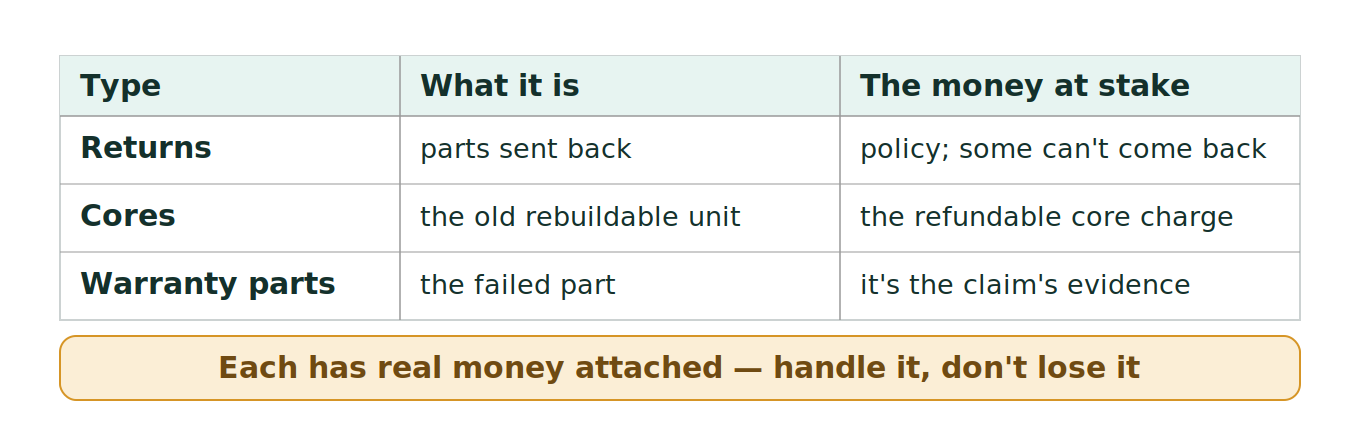
Three flows run backward through the department, and each is real money that leaks when handled sloppily — a core not returned, a warranty part not tracked, a return not processed all cost the dealership directly.
Returns
Parts come back — wrong part, no longer needed, customer changed their mind — under manufacturer return rules with time limits, restocking fees, and non-returnable categories (electrical, special orders, opened items). Process returns promptly and by the rules: a return sitting unprocessed is money not credited and a count that’s wrong, and missing the return window means eating a part that could have gone back.
Cores: the deposit you get back
Many rebuildable parts — starters, alternators, pumps, injectors — carry a core charge, a deposit on the old rebuildable unit. The customer pays it and gets it back when they return the old core; the dealership returns cores to the supplier to recover its charges. Cores handled sloppily are pure lost money: an unreturned core is a deposit the dealership eats, and a core room that isn’t managed piles up value that should have been credited. Track cores in, get them back out.
Warranty parts
Parts replaced under warranty often have to be retained and returned to the manufacturer for inspection, and a claim can be denied if the failed part isn’t produced. Tag, store, and track warranty parts per the OEM’s process — losing or scrapping one can cost the whole claim. This ties directly to warranty claim discipline.
Where it goes wrong
- Letting returns sit unprocessed or missing the return window.
- Not collecting or not returning cores and eating the charges.
- Failing to retain and return warranty parts, sinking the claim.
- Ignoring non-returnable categories and restocking rules.
Related
Filing warranty claims · Point of sale in the DMS · Purchasing and vendors · Stock, daily, and special orders.