
Engine and Transmission Overhaul
Major overhaul is precision work where a single missed tolerance means doing it twice, and the first real decision — before any wrenches — is whether to overhaul at all versus install a reman unit. Get the decision and the discipline right and it lasts; cut a corner and it comes back apart.
Overhaul vs reman
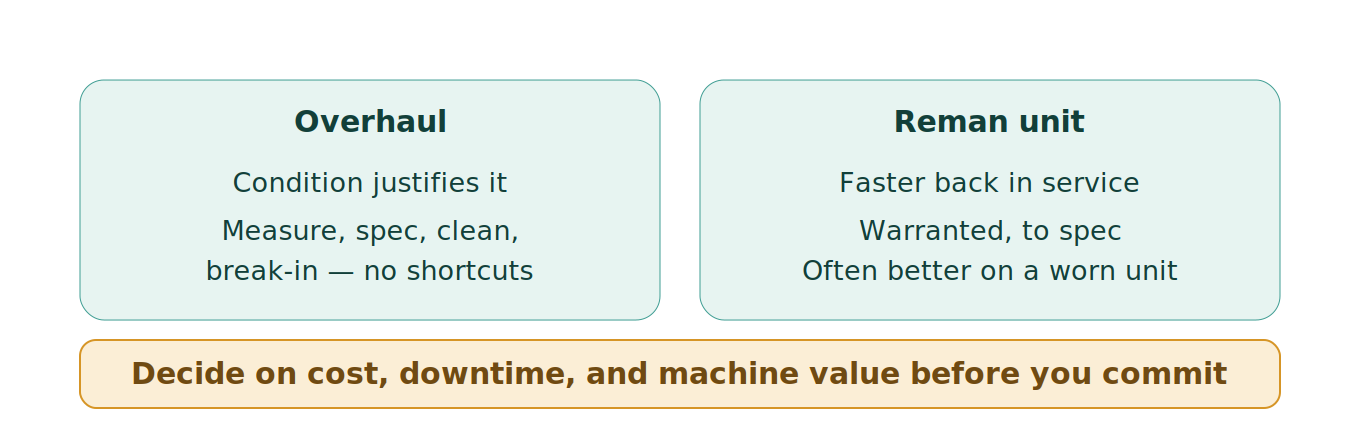
The choice is cost, downtime, and machine value. A reman engine or transmission (a factory-remanufactured unit to spec with a warranty) is often the better call than an in-frame or full teardown on a badly worn unit — faster to install, warranted, and sometimes cheaper all-in than a risky rebuild of worn components. An overhaul makes sense when the unit’s condition justifies it and the machine’s value supports it. Weigh downtime (the reman is usually faster back in service), total cost, and the machine’s remaining life before committing the customer.
The discipline: measure, spec, clean, break-in
If you overhaul, there’s no room for “close enough.” Measure everything against the manual — clearances, wear limits, runout, bore and journal sizes — and replace what’s out of tolerance, because a reused part past its limit fails. Follow torque specs and sequences exactly (including torque-to-yield fasteners, replaced not reused). Work surgically clean — contamination in a fresh engine or hydraulic/transmission assembly destroys it. And follow the break-in procedure, because a rebuild run in wrong wipes out the work. This is the job where the precision-measurement and torque discipline earns its keep.
Where it goes wrong
- Overhauling a worn-out unit where a reman was the better call.
- Reusing components that measure past their wear limits.
- Skipping torque specs, sequences, or one-time fasteners.
- Contaminating the assembly, or skipping the break-in procedure.
Related
Measuring and precision tools · Tools, torque, and fasteners · Reading service manuals · Transmissions.