
Where Every Dollar Goes
The denominator under absorption. Gross is only half the picture; the cost of keeping the doors open is the other half, and it’s large enough to turn a strong gross year into a loss.
Fixed vs variable
Fixed costs run whether or not a machine sells — facility, most salaries, insurance, utilities, software, and the floor-plan interest that accrues on every unit sitting on the lot. Variable costs move with activity — parts cost, freight, some labor, spiffs. Absorption is parts-and-service gross measured against the fixed side, which is why controlling fixed overhead and covering it with shop gross is the whole game.
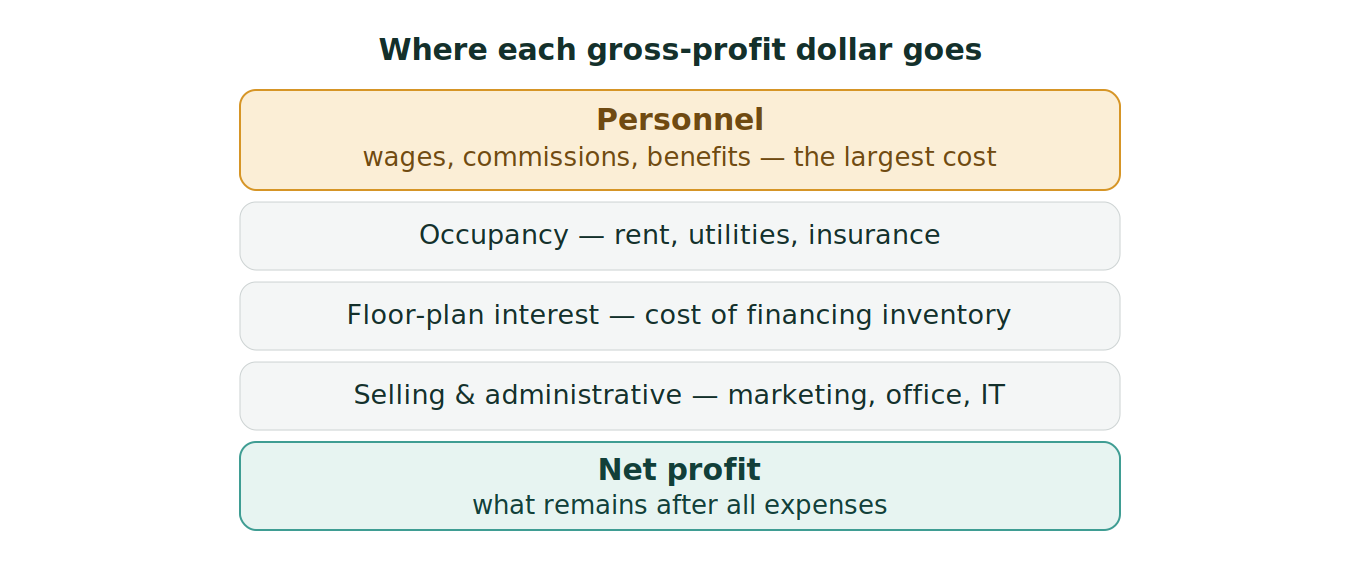
The line rookies forget: floor-plan interest
Every day a financed unit sits, interest accrues against its eventual gross, and curtailments pull cash as it ages. It’s a real, growing overhead cost that makes aged inventory a money-loser before anyone negotiates — which is why “move that unit” is a clock, not a mood.
Why it decides survival
A dealership with lean, well-controlled overhead and strong absorption drops whole-goods gross almost straight to the bottom line and survives a soft year. One with hot overhead has to sell a lot of iron at good margins just to break even, and a bad year puts it underwater. Volume doesn’t save it; the relationship between gross and overhead does.
Where it goes wrong
- Treating overhead as fixed background instead of the number to manage.
- Ignoring floor-plan interest on aging units.
- Chasing volume while overhead runs hot.
- Reading gross without the cost of doing business against it.
Related
How a dealership makes money · Financial statements · How dealers and manufacturers work together (floor plan) · Reading the scoreboard.