
The Seasons That Drive Everything
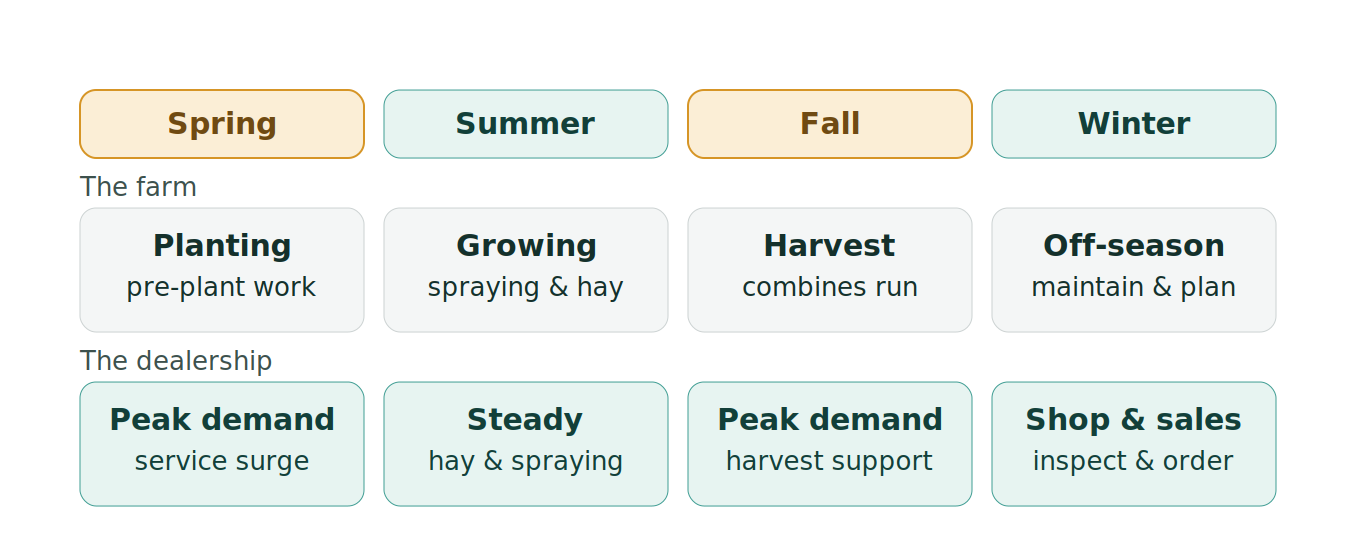
The whole dealership bends around the crop calendar. Two windows outweigh the rest — planting in spring, harvest in fall — and inside them a down machine isn’t an inconvenience, it’s the customer losing yield while the ground is right and rain is coming. Everything the dealership does about hours, staffing, stocking, and scheduling is arranged around those two moments.
The windows and the off-season
In-season (planting, harvest, and for some customers spraying and haying) the dealership runs hot: parts stays open late, service takes field calls at night, and a breakdown jumps every queue because the customer’s cost of downtime is measured in thousands an hour. Off-season — winter especially — flips it: the shop does the inspections, overhauls, and reconditioning that get machines ready before the rush, sales does much of its selling and ordering, and parts stocks ahead. The winter inspection exists to prevent the harvest breakdown; the pre-season PM exists so the machine starts on the first fit morning.
Why the rhythm decides your job
Timing beats almost everything. Ordering parts ahead of a seasonal peak means serving the rush from the shelf instead of on backorder; selling and delivering before the window means the customer is ready when the ground is; scheduling shop work off-season means the bays aren’t jammed when a real emergency lands. The customers live by this calendar, so the dealership that reads it — stocking, staffing, and selling ahead of demand — wins the season, and the one that reacts inside it is always a step behind at the worst possible time.
Different customers, different clocks
Row-crop peaks are planting and harvest; dairy and livestock run daily year-round with no single window; hay peaks across several cuttings by weather; a landscaper’s season is spring-through-fall mowing. Reading a customer’s calendar tells you when to reach them, when they’ll buy, and when a breakdown becomes an emergency.
Where it goes wrong
- Reacting to a seasonal peak instead of stocking and staffing ahead of it.
- Scheduling non-urgent shop work into the busy window.
- Selling and delivering a seasonal machine too late to be ready.
- Being surprised the shop is buried every October.
Related
What a dealership actually is · Forecasting parts demand · Harvest and seasonal rush readiness · Who is the customer.