
Hydraulic and Stored Energy Hazards
Hydraulic systems run at pressures that turn a pinhole leak into a weapon and hold energy that moves a machine after it’s shut off. Two things keep you whole: never touching a leak, and never trusting “off.”
Injection injury: never touch a leak
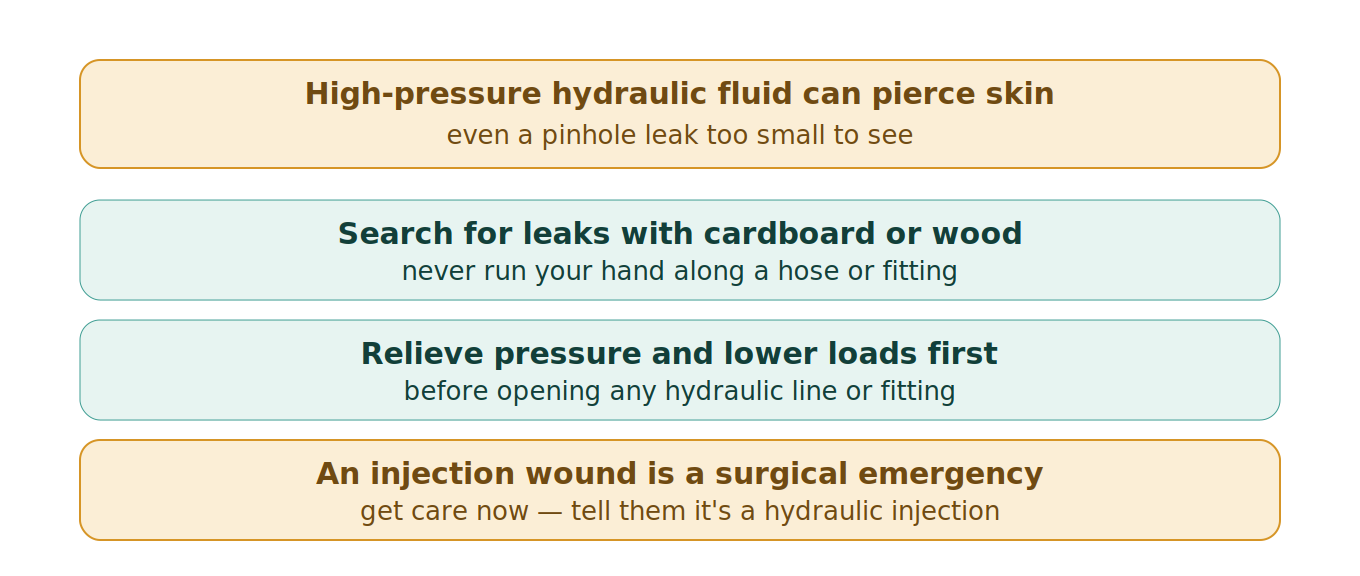
High-pressure hydraulic fluid escaping a pinhole can be driven through the skin, injecting fluid into the body. The stream can be invisible, the entry wound looks trivial, and it’s a true surgical emergency — untreated it costs a limb or a life, and it must be treated fast at a hospital that’s told it’s a high-pressure injection injury, not a minor cut. So: never run a hand along a hose looking for a leak. Find leaks with a piece of cardboard or paper, and relieve pressure first. The same danger applies to high-pressure fuel systems.
Stored energy: off isn’t safe
A hydraulic system holds pressure after the engine stops — in accumulators, in lines, and in a raised implement held up by the cylinder. That energy can drop a load or move a component while you work. Before working: lower implements to the ground or block them, relieve system pressure per the manual, and remember accumulators stay charged after shutdown. This is the hydraulic side of lockout/tagout, and it’s where people get crushed by a load they thought was parked.
Where it goes wrong
- Searching for a hydraulic or fuel leak with a hand.
- Treating a pinhole injection wound as a minor cut.
- Working under a raised implement held only by hydraulics.
- Assuming the system is de-energized because the engine’s off.
Related
Lockout/tagout · Hydraulics and hydrostatics · Fuel systems · Shop equipment and stored energy.