
Matching Hay and Forage Equipment
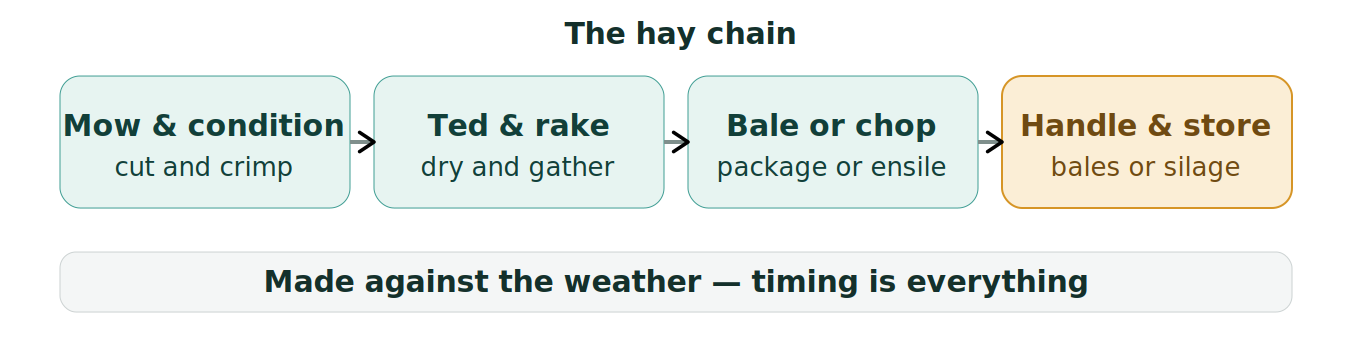
Hay is made against the weather in a narrow window, so the customer buys speed, reliability, and a package that fits their market. The bale type has to match how they sell and handle hay, not just the field.
The bale decision is about their market
- Round balers — the cattle-operation standard, one person with a loader.
- Small square balers — the horse-hay and retail market, where the premium is and buyers want liftable bales.
- Large square balers — high-volume commercial hay, dense bales that stack and truck.
- Silage/baleage — chopping or wrapping at higher moisture, a different window and equipment.
Sell round bales to a customer whose market is horse-people wanting small squares and you’ve mismatched the machine to how they make money.
Balance the chain, sell the reliability
The pieces have to keep up with each other — a baler that outruns the mowing is a bottleneck, not an upgrade. And because hay is weather-driven across multiple cuttings, in-season reliability and fast service are the real selling points: a missed window is a lost cutting, and the dealer who keeps hay tools running earns fierce loyalty.
Where it goes wrong
- Selling a bale type that doesn’t fit the market or handling.
- Mismatching capacities so one machine bottlenecks the chain.
- Underselling in-season reliability to a weather-driven customer.
- Ignoring the number of cuttings and the durability it demands.
Related
Who is the customer · The seasons of ag · Tractors (PTO/hydraulic match) · Harvest readiness.