
Purchasing and Vendors
Where parts come from is a running set of trade-offs — OEM versus aftermarket, freight and terms, program timing — and buying well protects both margin and the customer relationship. The cheapest source isn’t automatically the right one, and the fastest isn’t automatically worth its freight.
OEM vs aftermarket
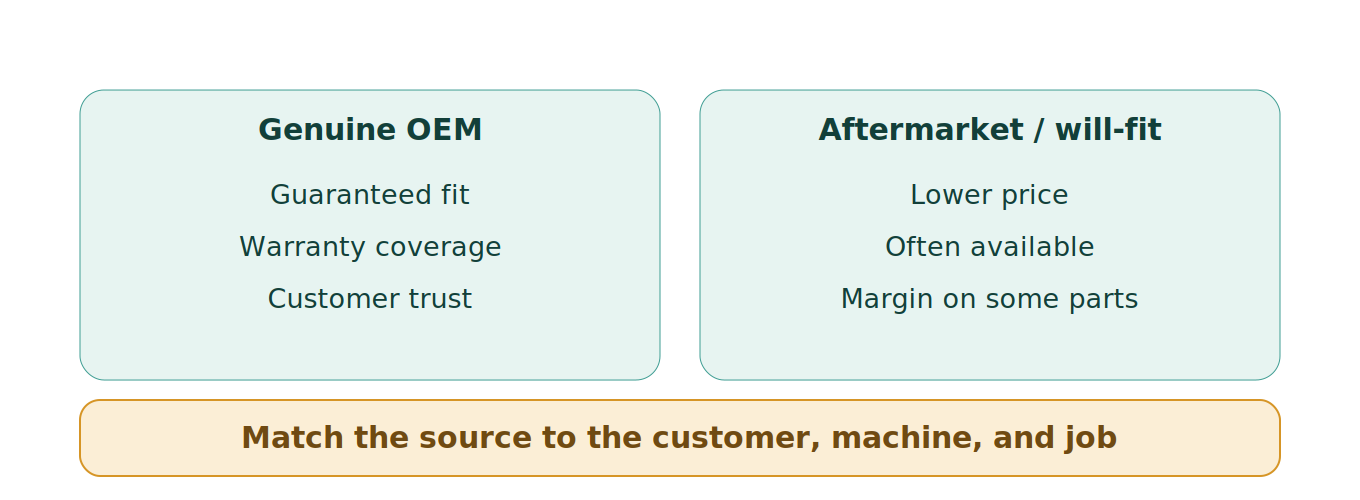
OEM parts carry the manufacturer’s fit, warranty, and (for warranty repairs) requirement — some jobs must use OEM, full stop. Quality aftermarket parts can offer real savings on the right applications and serve the price-sensitive customer. The judgment is matching the source to the part and the customer: OEM where fit, warranty, or requirement demand it; reputable aftermarket where it genuinely fits and the customer wants the value. Selling a cheap aftermarket part that fails, or on a warranty job where OEM was required, costs more than it saved.
Buy on the program and the terms, not just the price
Suppliers run programs, volume discounts, and terms, and timing purchases to them lowers cost — the same discipline as ordering stock on schedule for the best freight rather than expediting. Buying deeper ahead of a supplier program or a seasonal need, when it’s justified, beats paying more piecemeal later. Freight and terms are part of the real cost, not an afterthought.
Manage the vendor relationship
Reliable vendors who ship right and stand behind parts are worth cultivating; the cheapest vendor who’s late, ships wrong, or won’t handle returns costs more than the savings. Consolidating with strong suppliers earns better terms and program access, and a good relationship gets you taken care of when you need a part fast or a problem fixed.
Where it goes wrong
- Using aftermarket where OEM fit, warranty, or requirement was needed.
- Buying on unit price alone and ignoring freight and terms.
- Missing supplier programs and volume timing.
- Chasing the cheapest vendor at the cost of reliability.
Related
Part numbers and supersessions · Stock, daily, and special orders · Managing obsolescence · Parts financials and margin.