
Inventory and Working-Capital Strategy
Inventory is where a dealership’s cash goes to live, and managing it well is one of the biggest levers on the whole business’s financial health. Too little inventory loses sales; too much drowns the business in carrying cost and aged units. The strategy is having the right stock, turning it, and not letting it tie up cash it shouldn’t.
Inventory is cash in a different form
The whole goods on the lot and the parts on the shelf are the dealership’s largest asset — which means they’re cash converted into stock, and every dollar sitting in inventory is a dollar not available for anything else. That reframes inventory management as working-capital management: the goal isn’t just having what customers want, it’s not tying up more cash than necessary to have it. A lot full of aged units and shelves full of dead parts look like a well-stocked dealership and are actually cash trapped, bleeding carrying cost, and heading toward markdowns. Managing inventory is managing the cash inside it.
Turn it, and watch the aging
The health metric is turns — how fast inventory sells and gets replaced — because a unit or a part that turns quickly recovers its cash and earns its margin, while one that sits accrues carrying cost (floor-plan interest, obsolescence, space) and drifts toward a loss. Aged whole goods and obsolete parts are the enemies: the discipline is moving aging units before they get stale (the aging clock from the used-equipment lessons), managing parts obsolescence, and keeping the mix fresh and turning. A dealership that turns its inventory keeps its cash working; one that lets it age ties cash up and takes the markdowns.
Balance the risk both ways
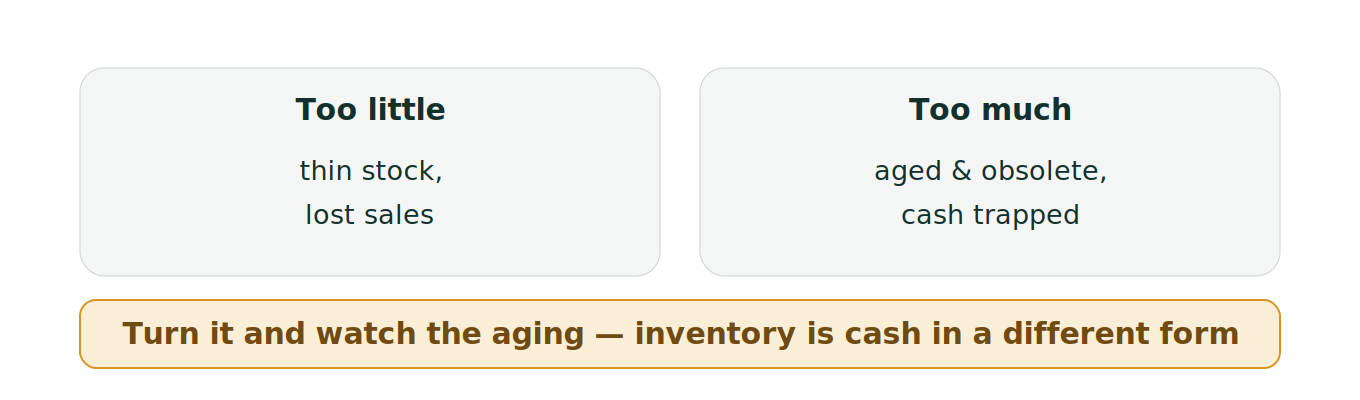
The strategy balances two failures. Too little inventory — thin on popular units, low parts fill rate — loses sales and sends customers elsewhere. Too much — overstocked, aged, obsolete — drowns the business in carrying cost and trapped cash. The right level is enough to serve the market well while turning fast enough to protect liquidity, adjusted for the season (stocking ahead of the busy windows, leaning out after). Getting this balance right, unit by unit and category by category, is a continuous management job and one of the strongest levers on the dealership’s cash and profit.
Where it goes wrong
- Treating inventory as stock to have rather than cash to manage.
- Letting whole goods age and parts go obsolete, trapping cash.
- Overstocking into carrying cost, or understocking into lost sales.
- Ignoring turns and the seasonal timing of inventory levels.
Related
Whole-dealership financial management · Whole-goods inventory · Inventory and floor-plan accounting · Used equipment: aging and turn.