
Shipping, Receiving, and Transfers
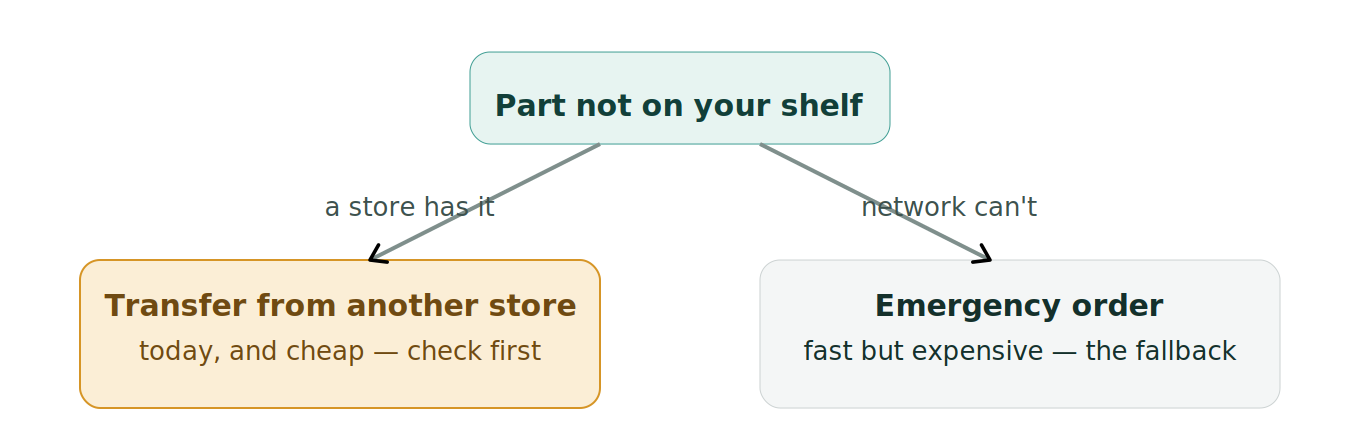
A part you need is often already in the dealer network — at another store, or reachable on a routine transfer — and the discipline that saves real money is checking that network before reflexively placing an emergency order. Premium freight on a part sitting at your sister store an hour away is money thrown away.
Check the network before you expedite
Multi-store groups move parts between locations on regular transfer runs, and a part that’s out at your counter may be on the shelf at another store in the group. Before emergency-ordering at premium freight, check the network: a same-day or next-run transfer often gets the part faster and far cheaper than expedited freight from the manufacturer. This one habit — network first, expedite last — saves the department meaningful money over a year.
Transfers keep the whole network’s inventory working
Transfers let the group serve a customer from combined inventory and balance stock — moving a slow-mover to a store where it sells, pulling a needed part from where it sits. Transfers get entered and tracked like any inventory movement, so both stores’ counts stay accurate; an untracked transfer breaks the count at both ends.
Receiving and shipping done right
Inbound shipments and transfers get checked against the manifest and received into the system promptly (the receiving discipline), and outbound parts and cores get shipped with correct paperwork so credits and counts land right. Sloppy shipping paperwork is lost credits and mis-tracked inventory.
Where it goes wrong
- Emergency-ordering a part that’s on a sister store’s shelf.
- Not checking the network before paying premium freight.
- Failing to track a transfer and breaking both stores’ counts.
- Sloppy shipping paperwork that loses credits.
Related
Multi-location inventory sharing · Stock, daily, and special orders · Receiving and put-away · Returns and cores.