
Forecasting Parts Demand
Parts demand is predictable enough to get ahead of — it follows the crop calendar and the machine population — and the department that stocks ahead of the season serves the rush from the shelf while the reactive one serves it on backorder, exactly when the customer can least afford to wait.
Demand follows the season and the machines
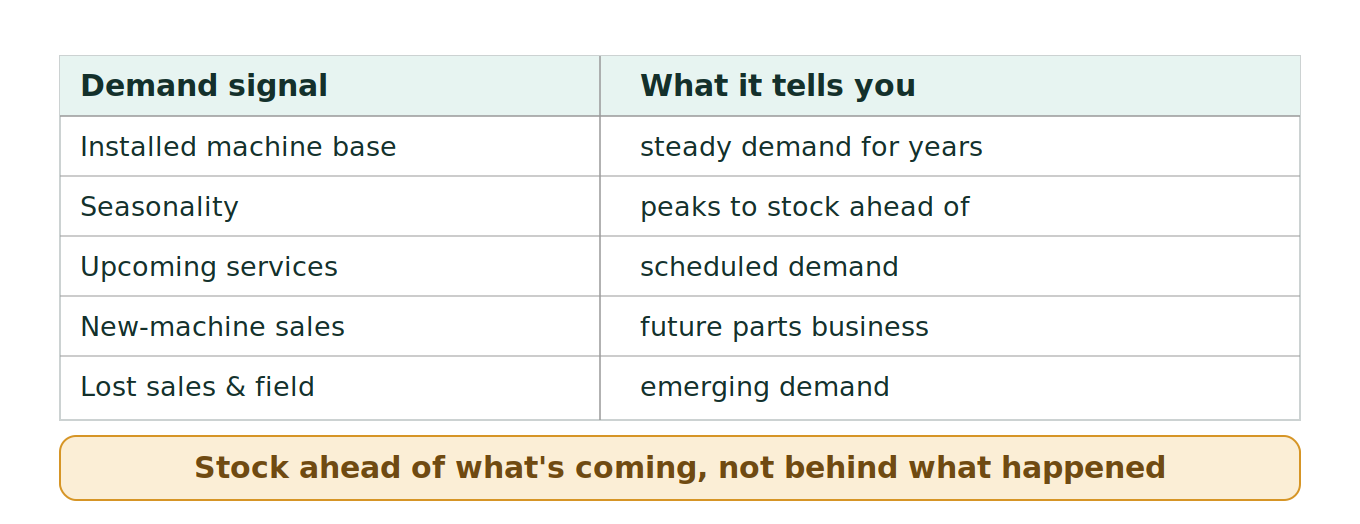
Parts demand isn’t random. It peaks with the crop calendar — filters and wear parts before planting, harvest parts and consumables before harvest, the maintenance items every pre-season service consumes — and it tracks the machine population in the area (what customers actually run, and how it ages). A part’s history plus the season plus what’s in the field predicts what next month needs, which is what stock ordering is supposed to act on.
Stock ahead of the window, not into it
The whole point of forecasting is timing: the parts a season needs have to be on the shelf before the window opens, because in-season is when a backorder costs the customer real money and sends them to the competitor. Building the stock order ahead of planting and harvest — from history and the population — is the difference between serving the rush from stock and scrambling on emergency freight. This is the parts version of ordering whole goods ahead against allocation.
Read the population shifts
Longer-term, the machine population shifts — new models arrive, old ones age out of the area, a big local operation changes color — and the parts forecast follows it, adding stock for the machines coming in and winding down stock for the ones leaving before it becomes obsolescence.
Where it goes wrong
- Reacting to seasonal demand instead of stocking ahead of it.
- Serving the in-season rush on backorder and losing customers.
- Ignoring the local machine population in stocking decisions.
- Carrying stock for machines that have aged out of the area.
Related
The seasons of ag · Inventory basics: min/max/reorder · Tracking lost sales · Harvest and seasonal rush readiness.